|
|
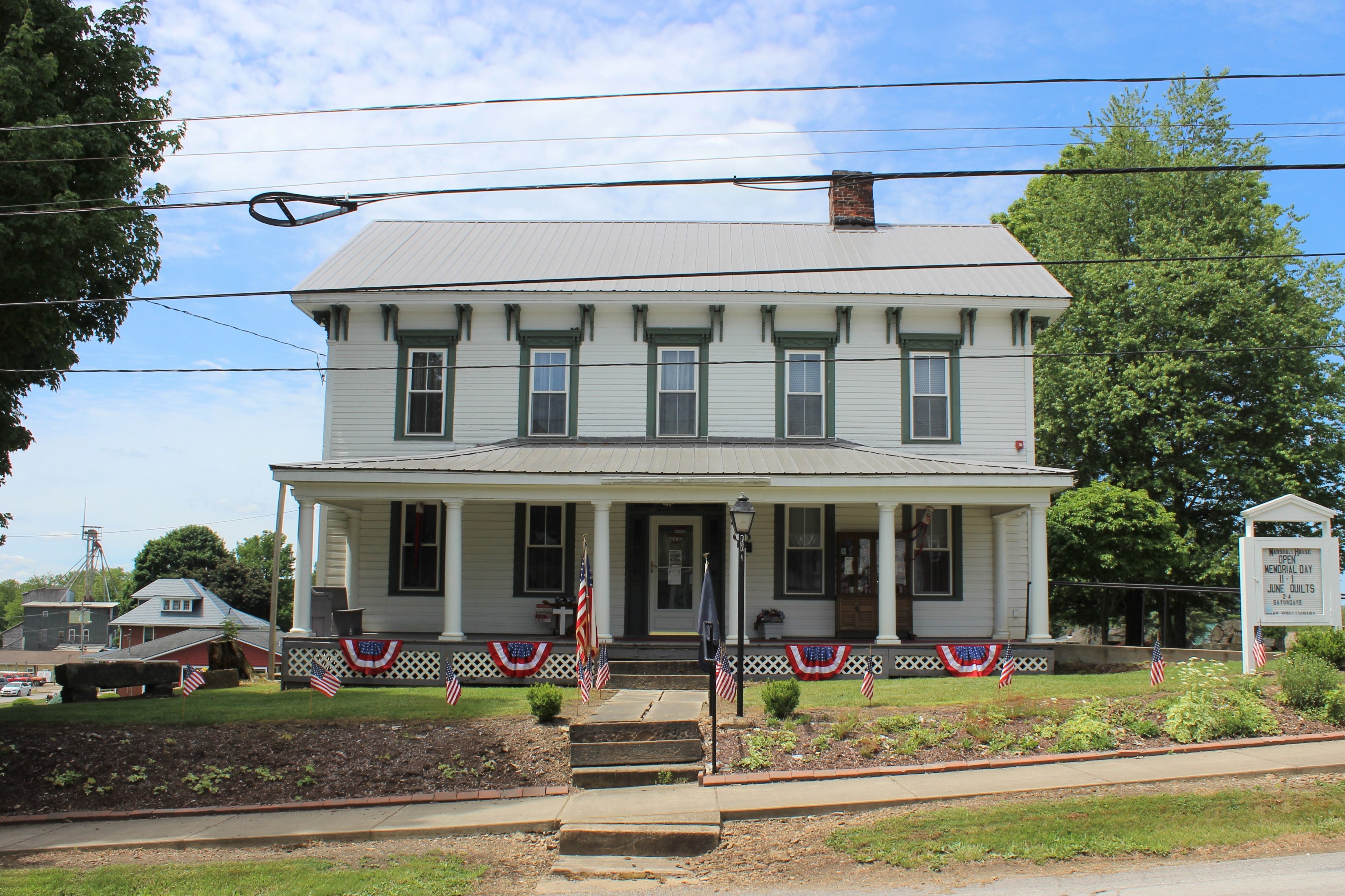
About the Marshall Family
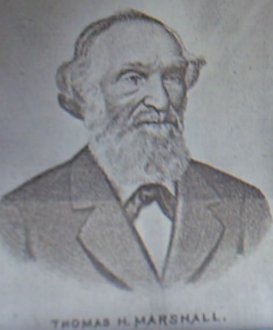 Thomas Hindman Marshall came from pioneer Pennsylvania stock. Thomas Hindman Marshall came from pioneer Pennsylvania stock.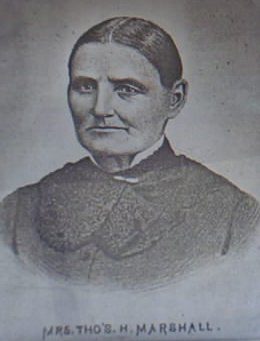
His great-grandfather, William Marshall (1722 - 1794), and wife Elizabeth Armstrong ( -1806), were natives of Northern Ireland and Scotland, respectively. They married and emigrated in 1750 while King George II sat on the British throne. They settled in the Marsh Creek Settlement south of Gettysburg, Pennsylvania. Here, William Marshall, Jr., Thomas H. Marshall's grandfather, was born on June 3, 1756. In 1779 he married Catherine Willson, daughter of neighbor Joseph Willson who had settled in the area in 1738.
Both William Marshall Senior and Junior served as privates in the York County Militia during the Revolutionary War. Adams County was not formed from York County until 1800. At the close of hostilities, the two generations of the family migrated to what today is southern Indiana County, Pennsylvania--the father taking up ground near Clarksburg on Marshall Run, and William Marshall, Jr., in nearby Blacklick Township. Some of the family had come to the area in1768, but the Indians had driven them back east over the mountains. William Marshall, Sr., and his wife were buried in the cemetery of Ebenezer Presbyterian Church where they had worshipped during the latter years of their lives.
In 1803, the younger William Marshall (1756 - 1831) took his family to what is today Wayne Township, Armstrong County, Pennsylvania. This is the same year in which the United States acquired the Louisiana Purchase during the administration of Thomas Jefferson. The Marshalls were the earliest settlers in the area. They first lived on the property where Dayton Fair Grounds can now be seen, but because clear title to the land could not be acquired, they moved in 1814 to adjoining property nearby where the Glade Run Presbyterian Church and graveyard were later to be built. The first services of this congregation were held in the barn of William Marshall, Jr. in 1808.
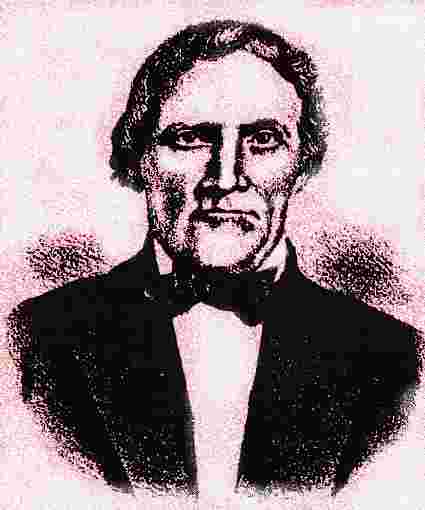 Robert Marshall (left), Thomas H. Marshall's father, was born August 19, Robert Marshall (left), Thomas H. Marshall's father, was born August 19, 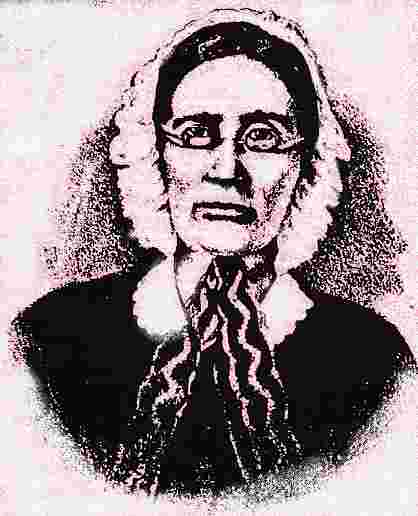
1799, the same year George Washington died. Robert was brought as a child to Armstrong County. On December 4, 1821, he married Mary Hindman (1801-1869) (right), a daughter of Thomas Hindman. The young couple settled a mile-and-a-half south of Dayton on the farm upon which the United Presbyterian Cemetery is now located. Here the Glade Run Associate Presbyterian Church was organized in1831 by Rev. John Hindman, brother of Mary Hindman Marshall. Robert Marshall moved to his father's farm in the 1830's. About 1839, he built the old corbie step gable red brick house on this property. This house was used as a station on the Underground Railroad, which helped escaping slaves on their way to Canada and freedom. Robert also owned a house in Dayton later in his life. He lived until 1881, seeing his great-grandchildren.
Thomas Hindman Marshall
Thomas Hindman Marshall, son of Robert and Mary Hindman Marshall, was born on July 29, 1824. At that time, James Madison was president. Thomas received the name of his maternal grandfather who had been killed in a bridge building accident in 1804. His schooling was completed in the newly established free public school system instituted in 1834. In 1844 his father purchased the property upon which Dayton was laid out in 1850, the year California was admitted to the Union. Also in 1850, Robert Marshall took his sons, William and Thomas H., into partnership and established a general mercantile store in Dayton. Thomas H. Marshall managed this store until 1861.
The same year Thomas H. Marshall entered the mercantile trade, he married Rosetta P. Neal on March14, 1850. They settled in Dayton and lived in part of the store which is still standing on Main Street. Rosetta was born September 26, 1827, and was a daughter of Robert and Sarah Love Neal of Cowanshannock Township, Armstrong County, Pennsylvania.
Next Page
email info@daytonpa.org
web host Steel City Webs |
|